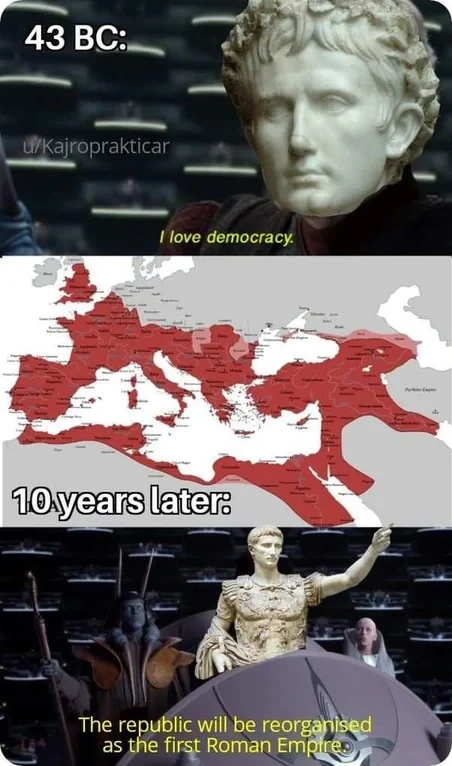
Cool, although I don’t think Romans were ever into democracy like those inferior Athenians. Maybe the tribune of the plebs were something approaching democracy, but only ever so slightly…
You might be surprised! Roman government was less directly democratic than Athens, but the franchise was much broader. Only about 10% of Athenians were citizens - by contrast, nearly two-thirds of the Late Republic’s population in Italy is estimated to have been citizens. The concept of popular sovereignty was extremely core to Roman ideology, and even legalistic violations of that principle could incur incredible unrest, even going into the Empire.
Not only that, but while casual histories often discuss the Senate as though it was the main organ of governance, the fact is that, counterintuitively, the Senate served a more executive than legislative role - all new laws had to be voted on by the Popular Assemblies, and the main route to enter the Senate to begin with was to be elected as a magistrate - again, by the Popular Assemblies.
Certainly, though, the Senate that Octavian was making pleas to had little love for democracy - it was precisely democracy that the oligarchs which dominated the Senate had spent the past ~100 years opposing, to the ruin of the Republic.

Cool, although I don’t think Romans were ever into democracy like those inferior Athenians. Maybe the tribune of the plebs were something approaching democracy, but only ever so slightly…
You might be surprised! Roman government was less directly democratic than Athens, but the franchise was much broader. Only about 10% of Athenians were citizens - by contrast, nearly two-thirds of the Late Republic’s population in Italy is estimated to have been citizens. The concept of popular sovereignty was extremely core to Roman ideology, and even legalistic violations of that principle could incur incredible unrest, even going into the Empire.
Not only that, but while casual histories often discuss the Senate as though it was the main organ of governance, the fact is that, counterintuitively, the Senate served a more executive than legislative role - all new laws had to be voted on by the Popular Assemblies, and the main route to enter the Senate to begin with was to be elected as a magistrate - again, by the Popular Assemblies.
Certainly, though, the Senate that Octavian was making pleas to had little love for democracy - it was precisely democracy that the oligarchs which dominated the Senate had spent the past ~100 years opposing, to the ruin of the Republic.